Walk pupils through theatre codes of conduct
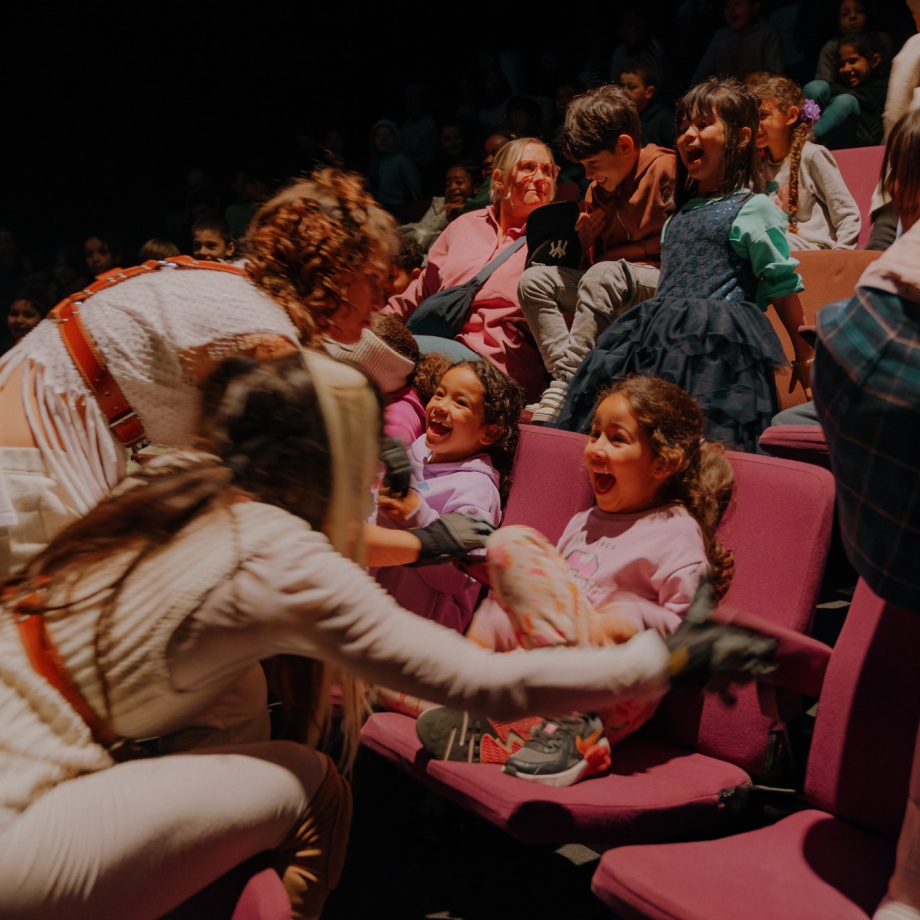
It’s important to prepare children for their own ‘role’: that of the spectator. They will watch what happens on stage from their chairs. Spectators can react, laugh, cry, applaud, but they always remain seated and don’t retell the entire story (or anything else) to their neighbour.
Discuss the difference between theatre and cinema
Why can you snack on a bag of popcorn during a film, but not during a theatre performance? Tell the pupils that the noise would not only be annoying for the other spectators, but also for the actors on stage. Besides the quality of the play and the actors’ performances, the interaction between the audience and the actors is a crucial factor in the performance’s success.
Arrive well on time
Make sure to leave enough time for a toilet visit and to put away bags and coats.
Don’t forget to turn off your phone before entering the theatre.
Tell the children that the theatre will briefly be dark
Explain that the lights will go down and the spotlights will be on the actors. This may be a bit scary to some children, but it’s also the perfect time to calm down, sit back in your chair, sharpen your senses and enjoy the performance!
Calmly guide children to their chairs
It’s best if teachers are spread out between the children. This makes it easier to calm them down after an intense or loud scene. Strong reactions are part of the game, but it’s important that attention quickly returns to the stage.
Don’t take photos during the performance
Taking pictures during the performance is disruptive. If you want production images, please request them via info@bronks.be.